News
New report evidences the need for coordinated change on embodied carbon

Sarah Amores
UST Senior Marketing & Communications Manager
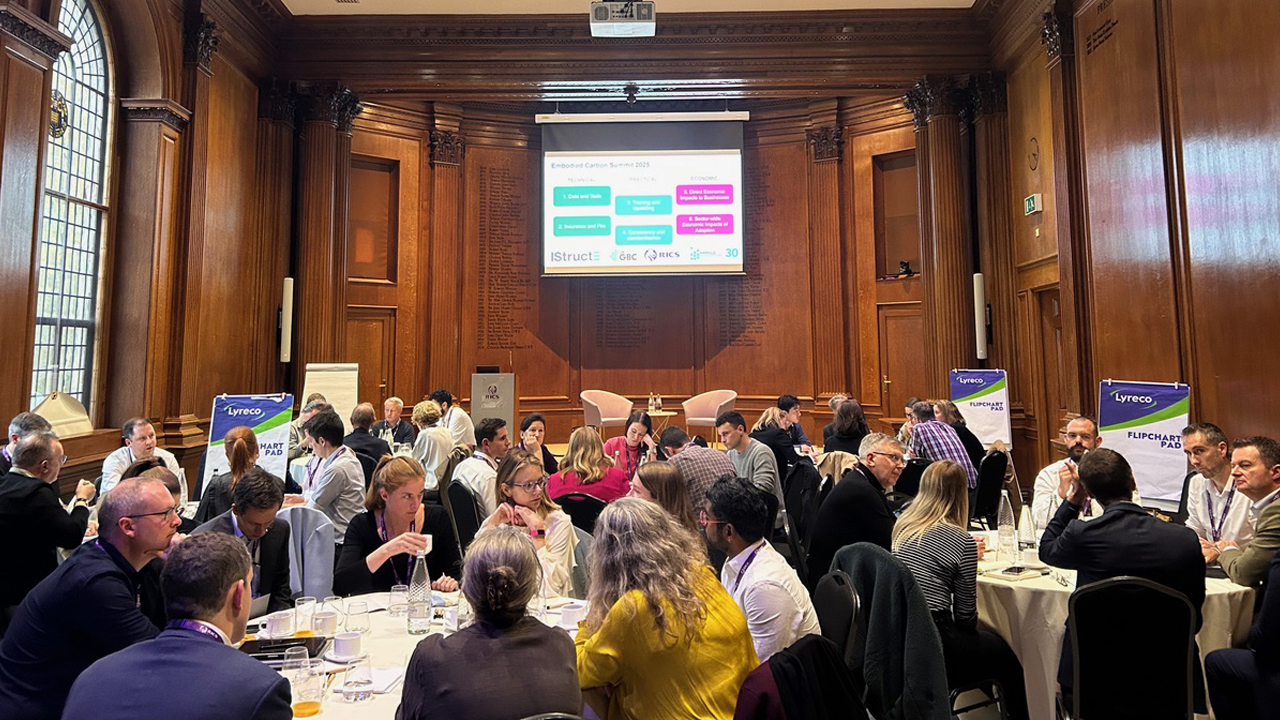
The evidence report summarises findings shared during the Embodied Carbon Summit on 5 November 2025.
London, 5 February 2026, The UK construction industry knows how to cut embodied carbon, but progress has stalled due to policy gaps, inconsistent standards, and economic misalignment, according to a new report published today.
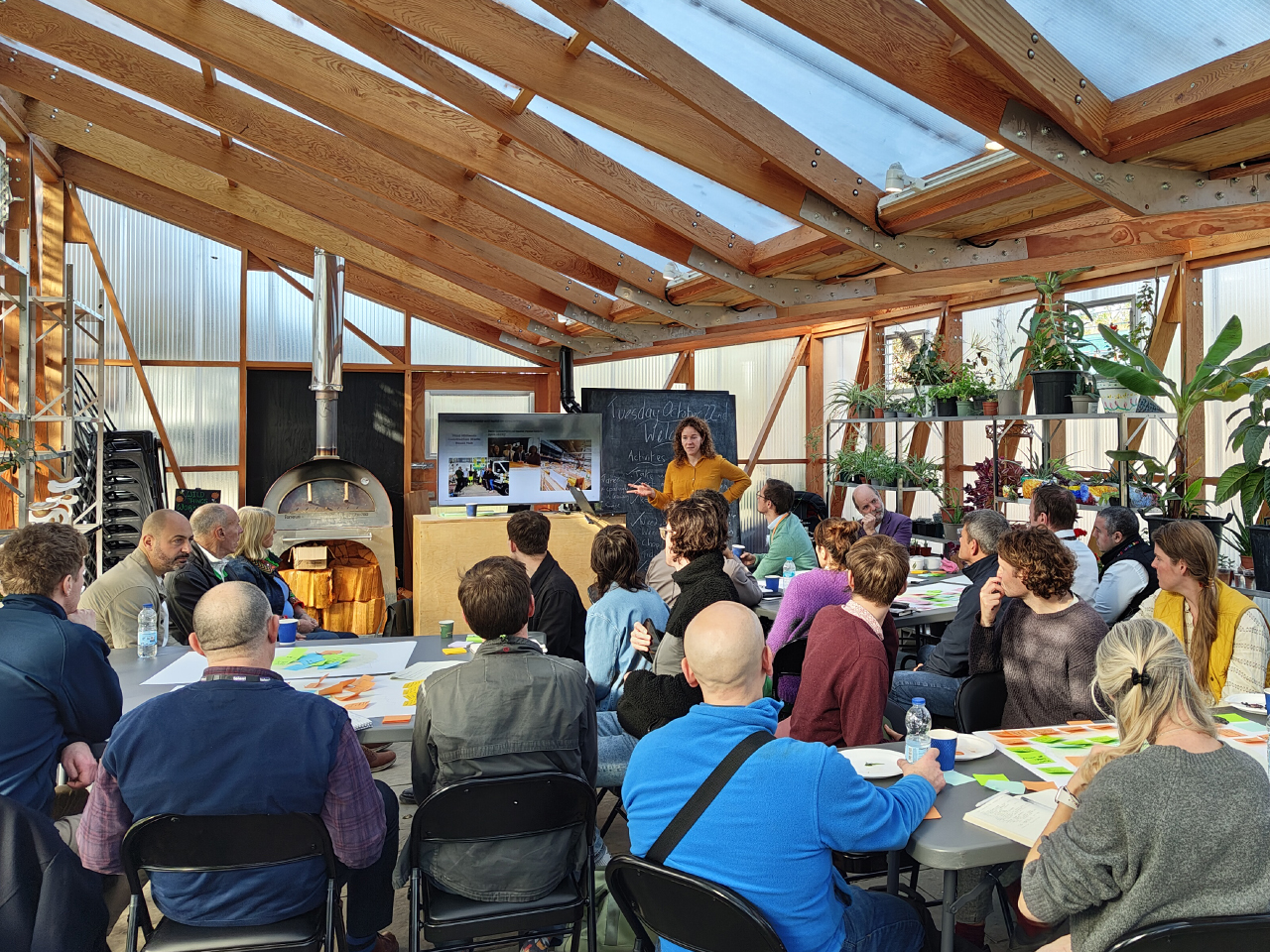
The Embodied Carbon Summit Evidence Report summarises findings and evidence shared by developers, engineers, architects, local authorities, insurers and academics during the Embodied Carbon Summit, that was held on 5 November 2025. The summit was a cross-industry event convened in response to AECOM’s study, The practical, technical and economic impacts of measuring and reducing embodied carbon in new buildings, which was written for the Ministry of Housing, Communities and Local Government earlier in the year. Today’s report finds that summit participants broadly agreed that embodied carbon reduction is achievable using existing tools and standards in the UK, but requires systemic changes in order to scale.
Initiatives such as the UK Net Zero Carbon Buildings Standard, Part Z, the updated RICS Professional Standard on Whole Life Carbon Assessment (2nd edition) and benchmarking work by the Future Homes Hub were highlighted as helping gain recent traction. However, summit participants warned that voluntary action alone will not deliver change at the speed needed.
Participants called for near-term government signals, including national consistency in whole-life carbon methodologies, investment in shared data infrastructure, and a phased approach to regulation that pushes industry forwards while allowing it to adapt.
Several concerns were also raised that the consequences from a lack of regulation providing a consistency of approach are rarely discussed and researched – such as the observed impact of different Local Authorities introducing different requirements on embodied carbon.
The Embodied Carbon Summit Evidence Report summarises the discussions that happened during the event, and groups practical, technical, and economic considerations to mirror AECOM’s research. While today’s report avoids making any specific policy recommendations, it’s clear that industry capability has advanced significantly in recent years, and the sector is now ready for national policy to accelerate further change.
The event and report were supported by the Happold Foundation, the Institution of Structural Engineers, UK Green Building Council, Royal Institution of Chartered Surveyors, Royal Institute of British Architects, and Chartered Institution of Building Services. Over 50 participants from across the construction industry attended the summit, joined by policymakers and civil servants.
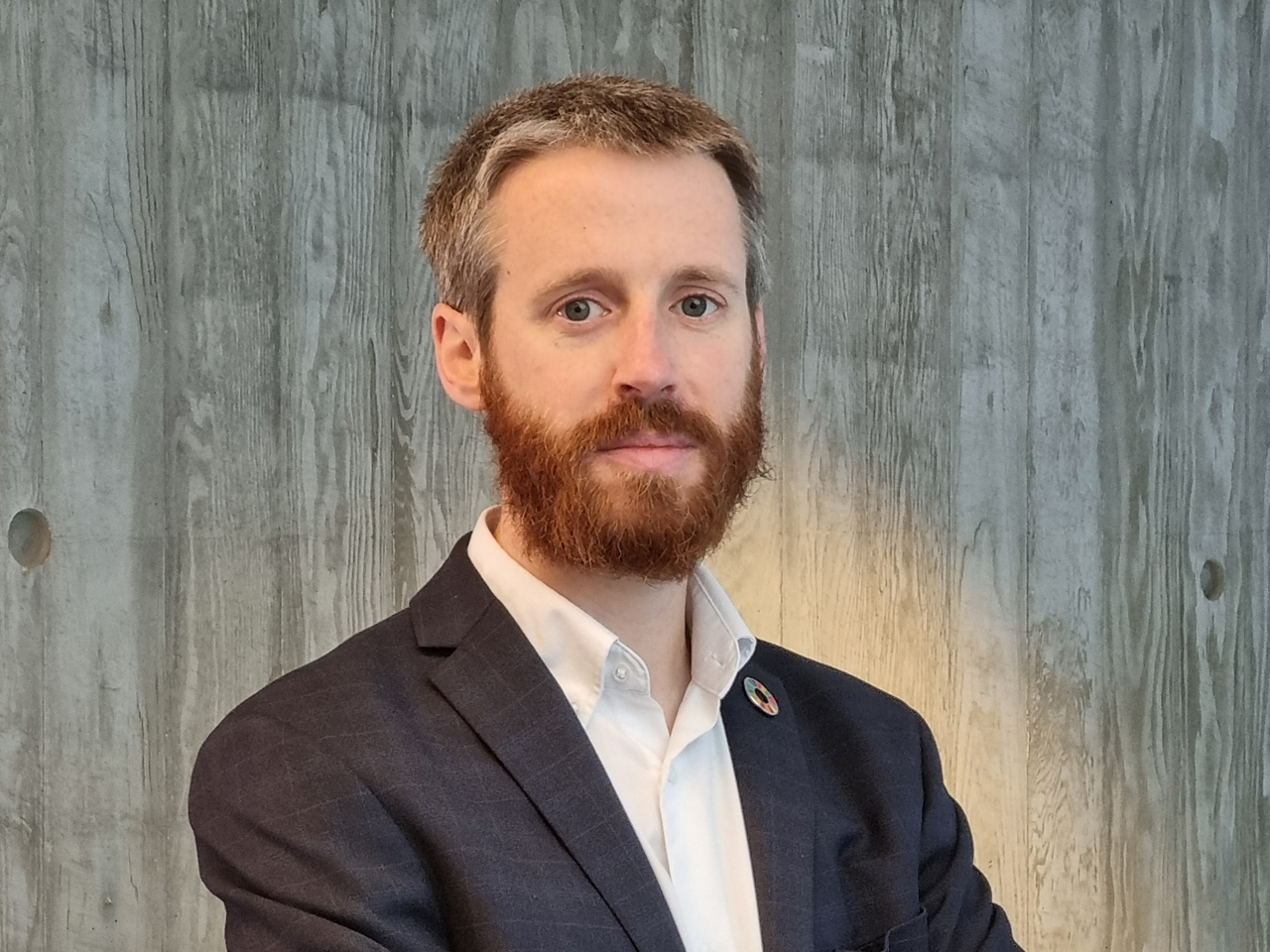
Will Arnold, Head of Sustainable Materials at the Useful Simple Trust and convenor of the summit under his former position as Head of Climate Action at the Institution of Structural Engineers, said:
“The debate over whether we can cut embodied carbon is over – the evidence shows that the industry is ready and already doing it. What we need now is clear government leadership: a national direction set by government to give our industry a whole‑life carbon backbone. Phased regulation will turn industry readiness into delivery at scale.”
Tom Newby, Trustee for the Happold Foundation, commented: “Making significant reductions to the embodied carbon emitted by the UK construction sector is absolutely critical for achieving the UK climate commitments and one of the great challenges facing our industry. It is vital that both the industry and the UK government do all they can to meet this challenge. The Happold Foundation is proud to support this summit and the subsequent report exploring the latest evidence and solutions.”
Yasmin Becker, Chief Executive at the Institution of Structural Engineers, said: “The Institution was pleased to convene the Embodied Carbon Summit 2025 and welcomes the publication of the report on it. It marks another step in the Institution’s commitment to put sustainability on par with structural safety and highlights the importance of addressing the practical, technical and economic impacts of measuring and reducing embodied carbon. This report provides powerful evidence for policymakers addressing the urgent need to introduce regulation and legislation to support the industry in meeting UK and global climate commitments. The Institution will continue to call for embodied carbon to be regulated around the world to meet these aims.”
Philippa Birch-Wood, Head of Climate Action at the UK Green Building Council, said: “UKGBC and members, alongside the wider sector, have been working to build the technical foundations for tackling embodied carbon. This summit reinforced that reducing embodied carbon is achievable, and industry is ready to deliver. We now need clear government direction to turn this readiness into real-world impact and reduce whole-life carbon across our sector.”
Charlotte Neal, Director of Professional Practice and Research at the Royal Institution of Chartered Surveyors, said: “The report provides an extensive overview of the Built Environment Industry’s response in taking concrete steps to improve the consistency and quality of carbon assessments, showcasing its readiness for the regulation of embodied carbon in buildings. Without regulation, a large share of emissions from construction activities are left unchecked and cannot be reduced in line with the UK decarbonisation targets. This is why it’s important to demonstrate the range of solutions that the industry has developed to make carbon assessments clear, reliable, and ready for a large-scale roll-out.”
Chris Williamson, President at the Royal Institute of British Architects, said: “Many architects are already designing lower-carbon buildings and using whole-life carbon tools and standards – but this report makes clear that the industry is ready to go further. However, voluntary action alone will not deliver the revolution needed to cut embodied carbon. The Government must provide a clear direction of travel – and bring forward the promised consultation on embodied carbon in the built environment. This would give developers, clients and practitioners much needed certainty while accelerating the transition to a low-carbon built environment.”
Dr Julie Godefroy, Head of Net Zero Policy at the Chartered Institution of Building Services, said: “This report is a timely and important reflection of how far industry capability on embodied and whole-life carbon has progressed, and of the need for coordinated action to unlock further change. CIBSE is pleased to have worked alongside partners across the sector in providing practical leadership – through guidance such as TM65, our whole life carbon assessment training, and our joint work on initiatives including Part Z and the UK Net Zero Carbon Buildings Standard. Together, these efforts demonstrate that the tools, skills and expertise already exist, and that national consistency and clear policy signals are now needed to accelerate delivery at scale.”
-ENDS-
Image gallery